
The Promises and
Perils of Being a Young Content Creator
Rebecca Ortiz, Ph.D., Sophia Condemi, M.A.,
Srivi Ramasubramanian, Ph.D., & Kelly Leahy, Ed.D.
This study interviewed 25 young adult content creators (who started around ages 12–15) to explore how online personas shape their identity and well-being. We found that creators wrestle with balancing authentic self-expression against their audience expectations, that marginalized creators face disproportionate hostility, and that they often cope with challenges on their own. Despite these risks, many still find genuine community and identity growth online.
Key Findings
Learn more about these themes and read participant quotes by clicking the tiles below.
Starting out wanting to just be themselves, young creators quickly found that likes, views, and audience reactions began shaping not just their content, but their sense of who they actually are.
What participants had to say about balancing their developing identities:
— 21-year-old, Hispanic, male, created Spanish-speaking content on YouTube"It starts to become performative. I think when people start catering to the algorithm in terms of the type of content that they make, they stop making the content that they really want to do, because that doesn't get views."
— 22-year-old, Hispanic, female, who created content on Instagram"They're all quite true to what I am... every piece of my social media definitely has an actual piece of me in it."
— 19-year-old, White, female, who created content on YouTube and TikTok"I think it also encouraged me to make, like, deep-rooted personality changes also, in just the way that I presented myself on a day-to-day basis. I think I was using a lot of the feedback I was getting on social media as a creator and using that to build my identity on a personal level."
Creators from marginalized groups — including queer, Black, female, and Jewish creators — faced disproportionate harassment online, and found that platform reporting tools offered little real protection.
What participants had to say about navigating online hostility and hate:
- 19-year-old, Black, male, TikTok creator"It would have done me less good than more good to reveal to the internet that I was, like, a Black kid."
- 19-year-old, White, female, who made content on YouTube and TikTok"I remember my first reaction not even being that upset, and being like, wow, like, the Russians like me, that's good. But then I think I kind of was really deeply uncomfortable after realizing kind of the context, and where it was, and what it was being used for. And the fact that there wasn't a lot I could do about it was really uncomfortable..it's kind of one of those that, like, I just felt like I had to let...exist, and just sit there, like, I didn't know what to do."
- 21-year-old, White, male, who created content on YouTube, Twitter, and InstagramI also am very privileged to be... you know, white guy. So, there are definitely different implications to being a woman or a girl online and...being a person of color."
Despite the hostility, many creators found genuine belonging online, with followers defending them, and content creation becoming a way to connect with their culture and community.
How the content creation and the internet was beneficial for young content creators:
- 21-year-old, White, nonbinary creator on TikTok""I grew up in like a very, very like Southern rural, like Christian area, so I did not really know what the LBQ+ was growing up. I actually found out what it was from shows and media... So just like the Internet, and also like being on the Internet helped me like, discover, discover more about the GBTQ [community]... I don't think I'd be half of where I am in my journey as a queer person without the Internet, like the Internet friends I made, and the Internet itself."
- 20-year-old, Dominican-American, female creator on YouTube, TikTok, and Instagram"I would pop out to the Dominican parade and do interviews there as well any like any social event. I'm always like repping my cultural background, and I feel like it... made me more like culturally aware, not only of my cultural background, but it also...kind of inspired me."
- 21-year-old, White, queer, female, creator on TikTok"My strategy was really to take those like smaller trends and then make them about queer content... if there wasn't anything about queer content, I would find a place to insert some sort of queer themed joke, because then it brought more of my audience to [my content]."
Surprisingly, some of the harshest experiences didn't come from strangers online but from classmates and peers who discovered their content, which led many creators to keep their online lives hidden from the people closest to them.
How offline relationships affected content creators:
- 21-year-old, White, female, creator on TikTok"Everyone knows they can poke fun about it because you put it out there."
- 22-year-old, Hispanic, female, creator on Instagram"I've never had, like, a very impactful, negative experience online... But yeah, most of my instances were definitely offline."
- 18-year-old, Hispanic, male, creator on YouTube and TikTok"If I see [my friends], I'm like, I don't wanna, like, be embarrassed in front of them, because they're gonna be like, oh, I watched your video, I didn't like it, or something. And, you know, at that young age, you take... that criticism, especially when, like, you have the kind of insecure... like, the situations that I was put in."
Learn how we did this study:
-
Communication of Identity Theory (Hecht & Phillips, 2021)
Personal layer: Represents how a person self-identifies (i.e., who am I?).
Enacted layer: How one presents their identity to others.
Relational layer: How a person relates to others (e.g., friend, leader, caregiver).
Communal layer: Informed by cultural and social norms, such as how someone is expected to perform within community contexts.
Trans-parasocial Relationships (Lou, 2022)
The interactive nature of social media has created an environment where content creators or influencers can respond or react directly to their followers, creating a “collectively reciprocal, (a)synchronously interactive, and co-creation relation between influencers and their captive followers” (Lou, 2022, p. 4).
-
We conducted semi-structured, in-depth interviews with 25 participants via Zoom.
Interview questions revolved around five primary topics:
Background and motivations for content creation
Management of content and copyright concerns
Navigation of harassment and inappropriate behavior
Identity-based experiences
Reflections and advice for future young creators
-
Our first round of recruitment required participants to have at least 3,000 followers.
The second round of recruitment had no follower count requirement—as our themes developed, we realized that follower count was not as central to participants’ subjective identity as a “creator.” Thus our final sample had follower counts ranging from 3,000 to 500,000+.
Participants were recruited via snowball sampling from personal networks and via paid advertising on social media.
-
Participants started creating online content before 18 years old.
Gender: 12 men, 12 women, 1 nonbinary
Race & Ethnicity: 13 (52%) identified with a racial/ethnic identity other than White
Average current age: 20 years old
Age that they started creating content: ~12 to 15 years
Additional identities referenced: Jewish, queer, bisexual, immigrant, and neurodivergent
Top platforms used: TikTok, YouTube, & Instagram
Meet this project’s research team:
-
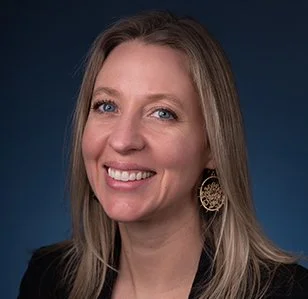
Rebecca Ortiz, Ph.D.
Associate Professor, Advertising
Endowed Chair of Public CommunicationsDr. Ortiz’s research explores how media and communication can improve public health and well-being, specifically among teens and young adults. As the Newhouse Endowed Chair of Public Communications, she is the principal investigator on the "Youth Well-Being in the Creator Economy” research project.
-
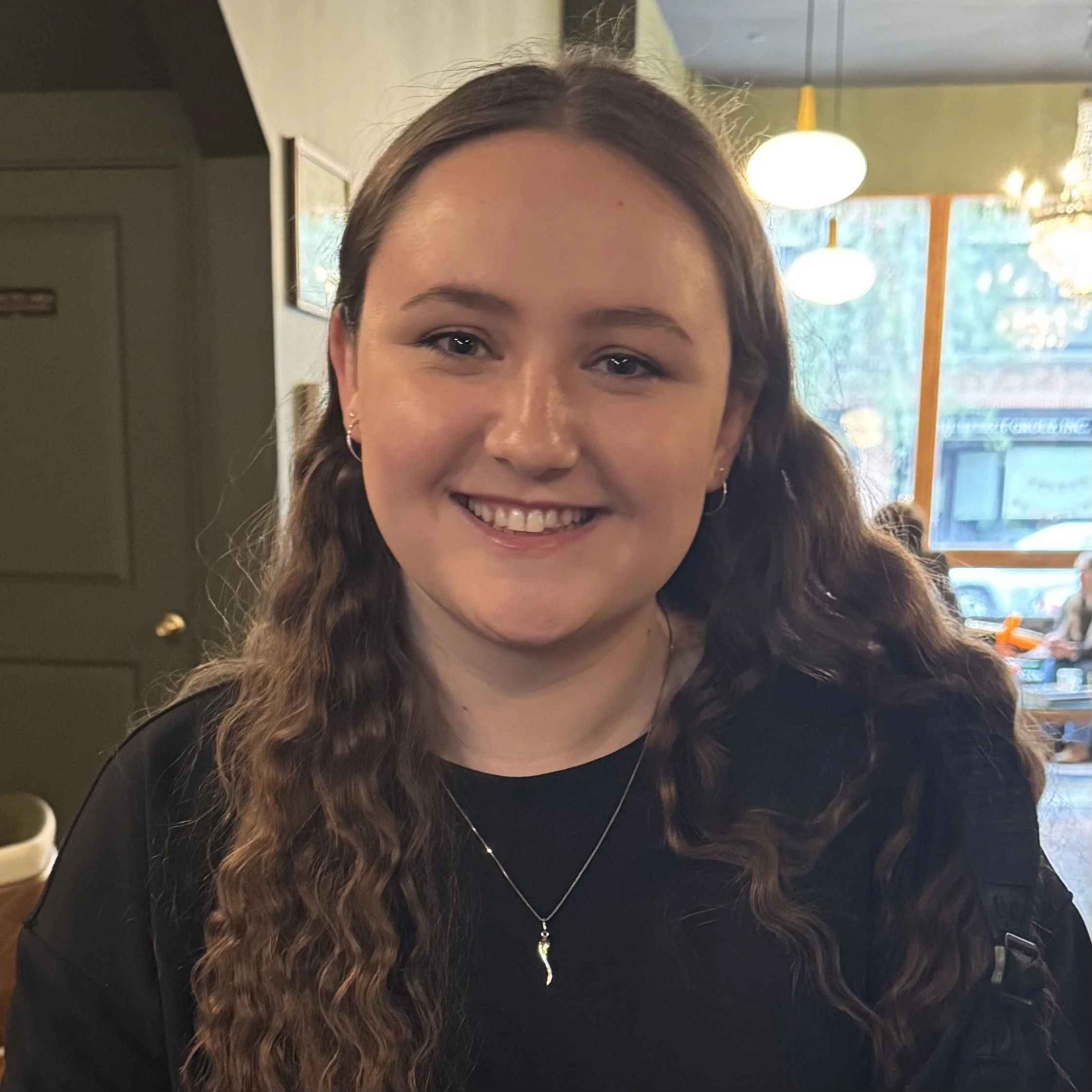
Sophia Condemi, M.A.
Graduate Alumna, Media Studies
Sophia’s experience spans research, marketing, and design. During her studies at Newhouse, Sophia utilized qualitative methods to examine how women and young people are represented on television. She is interested in how the stories being told on the small screen mirror and impact audiences.
-
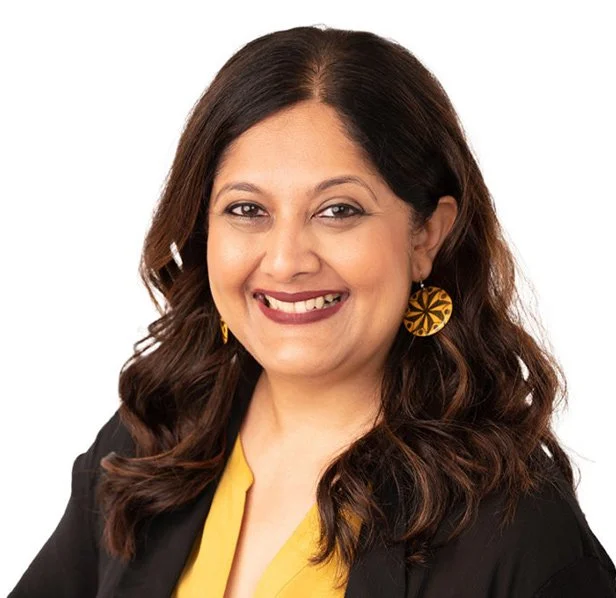
Srivi Ramasubramanian, Ph.D.
Newhouse Professor, Communications
Dr. Ramasubramanian is a leading scholar of media, diversity and social justice. Her work spans race and media, media literacy, implicit bias reduction, scholar-activism, spanning critical media effects, data justice, digital cultures, intersectionality and applied communication research. She is the is the founding director of CODE^SHIFT (Collaboratory for Data Equity, Social Healing, Inclusive Futures, and Transformation).
-
Kelly Leahy, Ed.D.
Assistant Professor, Television, Radio and FIlm
Dr. Leahy is a unique professional bridging research, development and production in educational media and educational technology. Her expertise is applying educational research to the most highly engaging forms of media. Her research applies a cultural and developmental lens to media, with special interests in educational technology, digital games and toys, mobile technologies, television and web content.